Mal Pais, Costa Rica

Expat Exchange > Costa Rica

Costa Rica

  Coastal   Beaches  

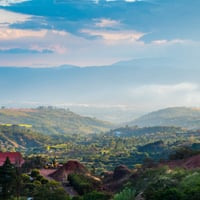
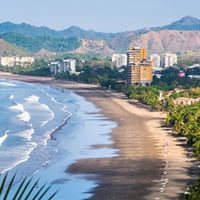
Costa Rica is a Central American nation bordered by Nicaragua and Panama, known for its remarkable biodiversity and commitment to environmental conservation. The country features diverse landscapes including tropical rainforests, cloud forests, volcanic mountains, and extensive coastlines on both the Caribbean Sea and Pacific Ocean. Costa Rica has a stable democracy, high literacy rates, and a well-developed tourism infrastructure, making it attractive to expatriates. The culture blends indigenous heritage with Spanish colonial influences, and the local population is known for a relaxed lifestyle philosophy called 'pura vida' (pure life). The economy relies heavily on tourism, agriculture (particularly coffee and bananas), and technology sectors. Life in Costa Rica offers a good quality of life with access to modern amenities in urban areas, though rural regions may be less developed.

Immigration Help Costa RicaImmigration Help Costa Rica
Connect

Costa Rica Legal Residency is an articulately bi-lingual boutique firm with 15 + years of successful experience and exclusive focus on Costa Rica Temporary and Permanent Residency, Renewals, Digital Nomad, and Citizenship. Located minutes from the Department of Immigration.

Click connect to have our partner contact you via e-mail and/or phone.

Immigration Help Costa RicaImmigration Help Costa Rica

Costa Rica Legal Residency is an articulately bi-lingual boutique firm with 15 + years of successful experience and exclusive focus on Costa Rica Temporary and Permanent Residency, Renewals, Digital Nomad, and Citizenship. Located minutes from the Department of Immigration.
Connect

Click connect to have our partner contact you via e-mail and/or phone.

Podcasts

Episode 8: Jake Barber - The Expat Finance Expert Returns

Episode 8: Jake Barber - The Expat Finance Expert Returns

Jake Barber, the Founder and CEO of SJB Global, is a life-long expat and an expert in expat finance. Over the course of Expat Exchange's nearly 30 years online, there are few people we have met with as much lived experience and professional acumen as Jake. We were thrilled to welcome him back to the show and look forward to having him on again!
Episode 6: Jake Barber - Expat Finance Expert and Lifelong Expat

Episode 6: Jake Barber - Expat Finance Expert and Lifelong Expat

Jake Barber is an expat finance expert and the founder and principal of SJB Global. A lifelong expat currently living in Marbella, Spain, Jake has vast experience helping expats from the United States, the United Kingdom, and other countries manage their finances while living abroad. Get a primer on what you need to know both before and after you move abroad!

Living in Costa Rica

Best Places to Live in Costa Rica

Discover the top-ranked towns in Costa Rica. Click on the town's name for a full profile of each town.
Rankings are based on a combination of many factors including schools, recreation, family-friendliness, cost of living and crime.

Visa & Residency

Obtaining a residency in Costa Rica is a process that can be straightforward if the applicant meets all the requirements and follows the necessary steps. The most common types of residency visas for expats are the Pensionado Visa and the Rentista Visa. To qualify for the Pensionado Visa, applicants must prove a permanent income of at least $1,000 per month from a pension or retirement fund. The Rentista Visa requires a monthly income of $2,500 for at least two years, guaranteed by a banking institution, or a $60,000 deposit in a Costa Rican bank. Another option is the Investor Visa, which requires a minimum investment of $200,000 in a Costa Rican business or real estate. The process involves gathering a list of required documents, such as a birth certificate, police record, proof of income, and marriage certificate if applicable, all of which must be apostilled or authenticated by the Costa Rican consulate. After arriving in Costa Rica, the applicant must join the Caja Costarricense de Seguro Social (CCSS), which is the national healthcare system, and pay the corresponding fees. Applications are submitted to the General Directorate of Migration and Immigration. The process can be lengthy, taking several months to complete, and it is often recommended to hire a local attorney or a specialist to assist with the application to ensure all paperwork is correctly filed and to navigate the bureaucracy. Once approved, the residency is typically granted on a temporary basis, usually for one to three years, and can be renewed. After three years of temporary residency, applicants can apply for permanent residency. The process is considered average in difficulty compared to other countries, but it does require patience and attention to detail. Applicants must remain in Costa Rica for at least four months each year to maintain their residency status. The process is bureaucratic and can be slow, but it is generally manageable with the proper guidance and preparation.

Healthcare in Costa Rica

Costa Rica's healthcare system is recognized as one of the best in Latin America. The country operates a universal healthcare system, Caja Costarricense de Seguro Social (CCSS), which provides comprehensive coverage to citizens and legal residents. Public healthcare is funded by the government through a combination of social security contributions and state funding. The quality of public healthcare is generally good, with a network of hospitals and clinics spread throughout the country, although facilities may be more limited in rural areas compared to urban centers. Private healthcare is also available and is often used by those who prefer shorter wait times and more luxurious accommodations. Private healthcare costs can be high, but still generally lower than in the United States. Expats and digital nomads who become legal residents can join the CCSS by paying a monthly fee based on income, which then grants them access to public healthcare. Some expats also choose to purchase private health insurance or pay out-of-pocket for private medical services.

Cost of Living

Costa Rica has moderate to high costs of living, particularly in popular expat areas like San José and the Central Valley. Rental prices for a one-bedroom apartment in the city center range from $600-$1,200 USD monthly, while outside the center they are $400-$800. Property purchases average $2,500-$4,500 USD per square meter in desirable locations. Daily living expenses including groceries, utilities, and dining are reasonable compared to North America and Europe, though imported goods carry premium prices.

Weather

Costa Rica has a tropical climate with two main seasons: the rainy season (May to November) and the dry season (December to April). The Caribbean coast receives rainfall year-round, while the Pacific side experiences more pronounced dry seasons. Temperatures remain relatively consistent throughout the year, typically ranging from 70-90°F (21-32°C) depending on elevation. Coastal and lowland areas are hot and humid, while highland regions offer cooler temperatures.

Educational System in Costa Rica

Costa Rica's educational system is highly regarded in Latin America, with a strong emphasis on providing free and compulsory education to its citizens. Education in Costa Rica is overseen by the Ministry of Public Education, which ensures that all children have access to primary and secondary education. The system is divided into four main levels: preschool (educación preescolar), primary school (educación primaria or escuela), secondary school (educación secundaria or colegio), and higher education (educación superior). Preschool education starts at the age of four, and primary education begins at the age of six, lasting for six years. Secondary education is divided into two cycles: the first three years are general education, and the final three years are diversified, allowing students to specialize in academic or technical studies. The school year in Costa Rica typically runs from February to December. Students graduate from secondary school around the age of 17 or 18, after which they can choose to pursue higher education. The Costa Rican government invests a significant portion of its budget in education, and as a result, the country boasts a high literacy rate. Schools in Costa Rica are known for their bilingual education programs, particularly in Spanish and English, which is beneficial for expatriate families. Additionally, there are several private and international schools that offer curricula from other countries, such as the United States or the International Baccalaureate, which can be appealing to families moving to Costa Rica from abroad.

Copyright 1997-2026 Burlingame Interactive, Inc.

Privacy Policy Legal